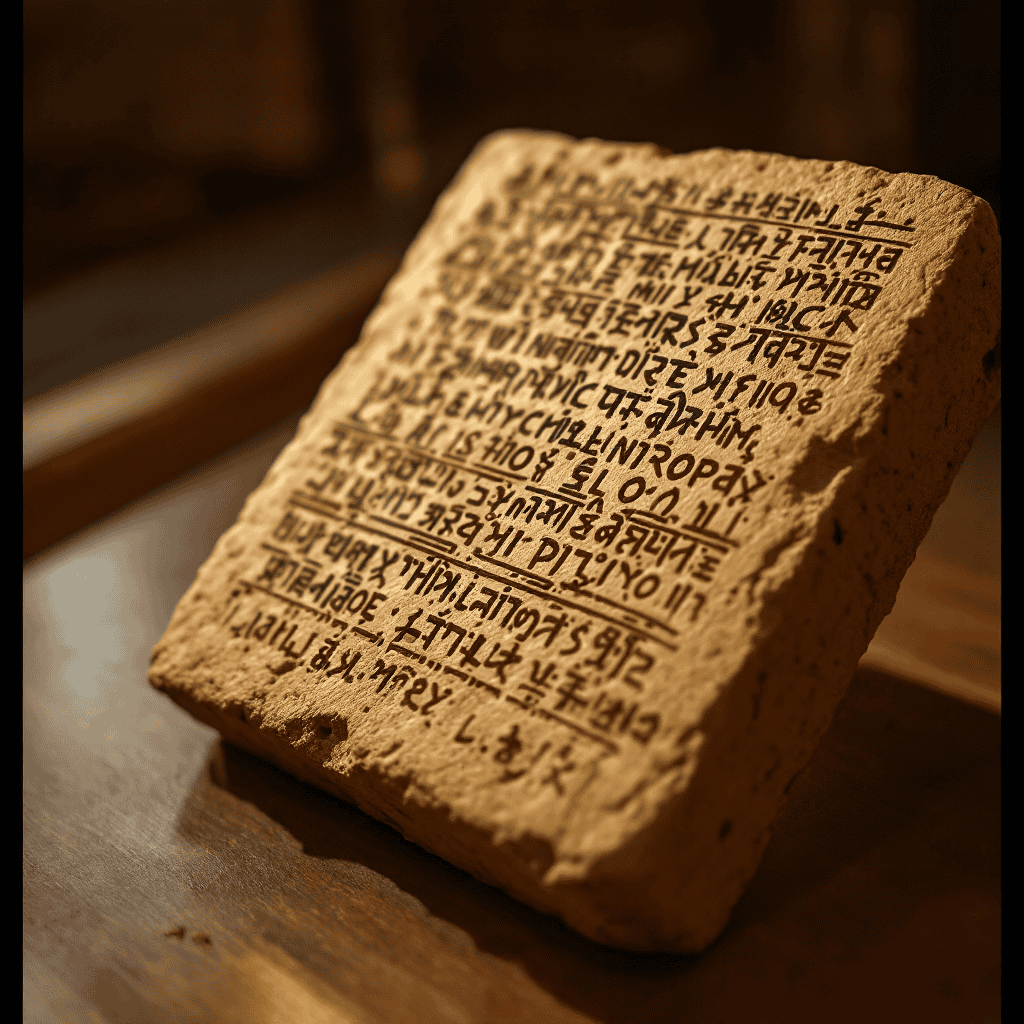
The Epic of Gilgamesh flood story is the oldest written account of a global deluge, carved into clay tablets around 2100 BCE in ancient Mesopotamia. More than a thousand years before the story of Noah appeared in Hebrew scripture, the people of Sumer preserved a nearly identical narrative: a man warned by a god, a massive boat, animals saved in pairs, and a world destroyed by water. The parallels are not coincidental. They reveal a transmission chain stretching back to a catastrophic event so profound that every culture that survived it carried the memory forward.
The Story of Utnapishtim and the Flood
In the Epic of Gilgamesh, the hero Gilgamesh seeks immortality after the death of his companion Enkidu. His journey leads him to Utnapishtim, the only human granted eternal life by the gods. When Gilgamesh asks how he achieved this gift, Utnapishtim tells him the flood story. The gods, led by Enlil, decided to destroy humanity because humans had grown too numerous and too noisy. But Enki, the god of wisdom and water, defied the council. He warned Utnapishtim in secret, instructing him to build a massive boat, seal it with pitch, and bring aboard his family, craftsmen, and the seed of all living creatures. The flood came. It raged for six days and seven nights. When the waters receded, Utnapishtim released a dove, then a swallow, then a raven. The raven did not return. He had found dry land.
The structure, the details, and even the sequence of events mirror the Genesis account so closely that scholars have long recognized the biblical flood narrative as a later adaptation of this earlier Mesopotamian tradition. The Atrahasis Epic and related Mesopotamian flood accounts confirm that this story was not invented by a single author. It was inherited, retold, and encoded across generations.
Why the Epic of Gilgamesh Flood Story Matters
The significance of the Epic of Gilgamesh flood story extends far beyond literary history. It establishes that the flood narrative was not unique to the Hebrew Bible. It was a shared cultural memory across the ancient Near East. The Sumerians told it. The Akkadians carried it forward. The Babylonians preserved it in the library of Ashurbanipal at Nineveh, where British archaeologist George Smith rediscovered it in 1872. When Smith translated the flood tablet, he realized he was reading a version of Noah’s story that predated the Bible by over a millennium. The discovery sent shockwaves through academia and religious institutions alike.
What the epic reveals is not plagiarism, but preservation. Ancient cultures did not invent flood myths independently. They inherited fragments of a real event, then adapted the story to fit their language, their gods, and their cosmology. The practice was called Midrash in the Hebrew tradition: retelling sacred narratives to carry meaning forward. The flood was not erased from history. It was encoded into it. And the archaeology of forgotten civilizations continues to uncover evidence that supports these ancient accounts.
Enlil and Enki: The Cosmic Rivalry Behind the Flood
The Epic of Gilgamesh flood story is not just about water and survival. It is about power, control, and the question of whether humanity deserves to exist. Enlil, the chief god and lord of the air, ordered the flood because humanity had outgrown its purpose. In the Sumerian worldview, humans were created as a worker species to serve the gods. When they became too independent, too loud, too conscious, Enlil decided to reset the experiment. Enki, the god of wisdom, fresh water, and creation, opposed him. Enki had designed humanity. He had blended the divine essence with the clay of the Earth. And when Enlil decreed annihilation, Enki chose defiance. He warned Utnapishtim. He provided the instructions. He preserved the seed.
This is the same dynamic that appears in Genesis under different names. The Elohim, a plural term often mistranslated as singular, debate among themselves before the flood. One voice demands destruction. Another ensures survival. The tension is not hidden. It is written into the text. Enlil becomes the archetype of the enforcer, the god who demands obedience and punishes autonomy. Enki becomes the archetype of the liberator, the serpent in the garden who offers knowledge even when it disrupts control. The flood was not divine wrath. It was a board meeting. And Enki hacked the outcome.
The full implication of this rivalry, and REDACTED, READ CHAPTER 12, becomes clear when we examine the biological and spiritual inheritance humanity may carry from that intervention. The redacted material explores the exact mechanism through which Enki’s defiance was encoded into the human genome and the energetic systems of the body. That synthesis is detailed in Chapter 12 of Master Thyself by Alex Wolfram.
The Younger Dryas and the Historical Flood Event
For most of recorded history, the flood narrative was treated as either literal religious truth or pure mythology. Modern geology and climatology have revealed a third option: the story may encode the memory of a real catastrophic event. Roughly 12,800 years ago, Earth entered a period of sudden and extreme climatic disruption known as the Younger Dryas. Temperatures plummeted. Ice sheets expanded. Then, around 11,600 years ago, the climate reversed just as violently. Massive ice sheets melted rapidly. Sea levels rose over 120 meters. Coastlines where early human settlements likely existed were submerged beneath the ocean. Entire ecosystems collapsed. The megafauna of North America, mammoths, saber-toothed cats, giant ground sloths, went extinct almost overnight.
Geological evidence increasingly points to a comet or asteroid impact as the trigger. Nano-diamonds, impact proxies, and a platinum anomaly layer found across multiple continents support the hypothesis that a massive extraterrestrial object struck the ice sheets covering North America or Greenland. The impact would have vaporized trillions of tons of ice, destabilized glaciers across the Northern Hemisphere, and sent continent-scale meltwater surges radiating outward. This is the event encoded in the Epic of Gilgamesh flood story, in the story of Noah, in the Hindu account of Manu, in the Mesoamerican myth of the Fourth Sun, and in hundreds of other flood traditions across every inhabited continent.
The consistency is not coincidence. It is memory. Civilizations that survived the Younger Dryas carried forward the story of what destroyed the world before them. The names changed. The gods changed. But the event remained the same. Understanding how celestial events shaped ancient timekeeping and biblical astrology frameworks helps decode the symbolic timestamps embedded in these narratives.
Teachers Who Came After the Flood
One of the most overlooked details in the Epic of Gilgamesh flood story is what happens after the water recedes. Utnapishtim does not simply restart civilization on his own. He is elevated by the gods. He is granted immortality and divine knowledge. And implicitly, he becomes a teacher. This pattern repeats across every post-flood tradition. In Sumer, the Apkallu, seven wise sages, appeared after the deluge to teach humanity agriculture, astronomy, law, and sacred architecture. In Egypt, Thoth brought writing, medicine, and geometry. In Mesoamerica, Quetzalcoatl arrived to restore order and knowledge. In Hindu tradition, Manu was guided by a divine fish who warned him of the flood and preserved the Vedas. In China, the Dragon Kings taught governance and water management after catastrophic flooding.
The flood survivors were not primitive hunter-gatherers discovering fire for the first time. They were civilized people who had forgotten how to survive without infrastructure. When the grid collapsed, they could not feed themselves. They could not rebuild. Someone had to come and teach them to start over. That is why every post-flood tradition includes a teacher figure. Not because early humans were ignorant, but because advanced humans had just been reset to zero. The flood did not destroy knowledge. It destroyed the systems that made knowledge unnecessary. What returned afterward was not civilization. It was civilizational memory, carried forward by those who had been warned in advance.
The mechanism by which this knowledge was preserved, encoded, and transmitted through REDACTED, READ CHAPTER 12 involved specific symbolic systems, astronomical alignments, and initiatory structures that allowed the chain of custody to remain unbroken across millennia. The full chain is traced in Chapter 12 of Master Thyself.
Göbekli Tepe and the Encoded Memory
If the Younger Dryas flood destroyed an earlier civilization, we would expect to find evidence of rapid reconstruction immediately after the waters receded. We do. Göbekli Tepe in southeastern Turkey was built over 12,000 years ago, placing its construction at the exact end of the Younger Dryas period. The site predates agriculture, metallurgy, pottery, and written language. Yet its builders organized the labor, the logistics, and the symbolic vision to erect massive T-shaped stone pillars arranged in precise circular enclosures. Modern researchers have proposed that carvings at Göbekli Tepe may encode astronomical knowledge, possibly even a record of the comet impact that triggered the Younger Dryas catastrophe.
This is not the behavior of people starting from scratch. It is the behavior of people racing to preserve what they knew before it was lost entirely. Göbekli Tepe was not the beginning of civilization. It was the continuation of something older, built by survivors who understood deep time, catastrophic cycles, and the fragility of memory. And when they finished encoding what mattered, they buried the entire site on purpose. Not to hide it, but to protect it. Stone survives what flesh cannot. And the story carved into that stone is the same story told in the Epic of Gilgamesh flood narrative: the world ended, the knowledge survived, and those who carried it forward did so with intention.
The exact symbolic and astronomical encoding methods used at Göbekli Tepe, including REDACTED, READ CHAPTER 12, align with the same sacred geometry frameworks preserved in Egyptian, Greek, and Hermetic traditions. This unbroken lineage is documented in Chapter 12 of Master Thyself.
From Gilgamesh to Genesis: The Transmission Chain
The Epic of Gilgamesh flood story did not remain isolated in Mesopotamia. It traveled. After the Babylonian exile in the 6th century BCE, Jewish scholars were exposed to Babylonian texts, libraries, and oral traditions. The Genesis flood narrative, written during or shortly after this period, carries unmistakable echoes of the Gilgamesh account. The dimensions of the ark. The sealing with pitch. The release of birds to test for dry land. The divine warning given to one faithful man. The survival of a remnant to restart creation. These are not universal archetypes that arose independently. They are specific narrative details inherited from a common source.
This does not diminish the Bible. It situates it within a broader tradition of sacred memory. The Hebrews did what every ancient culture did: they took the flood story they inherited and retold it through their own theological lens. Where the Sumerians framed it as a conflict between gods, the Hebrews framed it as a covenant between one God and humanity. The event remained the same. The interpretation evolved. And that evolution reveals something profound: scripture is not a static transmission. It is a living one. Each generation receives the memory and rewrites it to preserve what matters most. The content may shift, but the container, the flood, the warning, the ark, the survival, stays intact.
How this transmission process worked, and REDACTED, READ CHAPTER 11, becomes clear when examining the council decisions, editorial choices, and political pressures that shaped which texts were canonized and which were suppressed. The full account is explored in Chapter 11 of Master Thyself.
Why the Flood Story Repeats Across Every Culture
If the flood were myth, we would expect variation. Instead, we find consistency. The Hopi speak of the Third World destroyed by water. The Maya describe the end of the Fourth Sun through deluge. Aboriginal Dreamtime stories preserve accounts of rising seas and ancestral lands lost beneath the waves. Celtic legends tell of drowned kingdoms. Tamil tradition speaks of Kumari Kandam, a vast landmass swallowed by the ocean. Norse mythology describes a primordial flood from the blood of the giant Ymir. Greek myth recounts Deucalion and Pyrrha surviving a flood sent by Zeus. Every inhabited continent carries this memory.
The explanation is not independent invention. It is inheritance. The Younger Dryas was a planetary event. Its effects were global. Coastlines submerged. River valleys flooded. Ecosystems collapsed. Every population that survived carried forward the memory of what destroyed the world before them. The Epic of Gilgamesh flood story is simply the oldest written version of that memory. It is not the origin. It is the first recording. The origin is the event itself, and that event left physical evidence in ice cores, sediment layers, impact proxies, and the drowned coastlines now lying beneath 400 feet of seawater.
Those who study ancient timing systems and natural cycles recognize that flood myths often encode not just historical events, but recurring patterns tied to celestial and environmental rhythms. The story was preserved because the threat was understood to be cyclical, not singular.
The Ark as Biological Preservation
One of the most debated aspects of the flood narrative, both in Gilgamesh and Genesis, is the ark itself. Skeptics dismiss it as physically impossible. Believers defend it as miraculous. Both miss the deeper layer. The ark was not just a boat. It was a gene bank. Utnapishtim was instructed to bring aboard the seed of all living creatures. Not adult breeding pairs of every species on Earth, but genetic preservation. Seeds. Embryos. Lineage. The capacity to restart biodiversity after collapse.
This interpretation aligns with what advanced civilizations would prioritize during a known extinction event. You do not save the adults. You save the code. DNA. Germplasm. The biological instructions needed to rebuild ecosystems once the floodwaters recede. If the Younger Dryas impact was preceded by astronomical observation, as Göbekli Tepe suggests, the builders may have known what was coming. The ark was not a rescue mission. It was a continuity protocol. And the story of that protocol was encoded into myth because myth survives when infrastructure does not.
The exact preservation techniques and REDACTED, READ CHAPTER 12, including how knowledge was encoded into stone, symbol, and biological lineage, are explored in detail in Chapter 12 of Master Thyself.
What the Flood Story Tells Us About Power
The Epic of Gilgamesh flood story is not just a record of disaster. It is a record of defiance. Enlil ordered the destruction. Enki ensured survival. The decision was made without humanity’s input, but one god chose to override the council and preserve what the others wanted erased. This is the same tension that runs through every suppression pattern explored across ancient history. Knowledge that empowers the individual is dangerous to systems built on control. The flood was not divine justice. It was a corporate decision to terminate a product line that had developed autonomy. And the ark was an act of corporate espionage, a god smuggling the source code out the back door before the system went down.
That defiance did not end with the flood. It continued through every tradition that preserved inner transformation over external authority. The Egyptian mystery schools taught that divinity was within. The Gnostics taught that salvation required knowledge, not obedience. The Hermetic tradition encoded spiritual awakening into alchemical language. The Knights Templar carried that lineage into medieval Europe. Freemasonry preserved it through initiation. Every link in that chain carried forward what Enki smuggled out of the flood: the knowledge that humans are not slaves, they are seeds. And seeds, when planted in the right conditions, grow into something the architects never intended.
The mechanism by which that knowledge was encoded into human biology, including REDACTED, READ CHAPTER 12, forms the core of the initiatory path traced throughout Master Thyself. The redacted section explains how chromosome fusion, FOXP2 mutation, and pineal activation may represent biological echoes of that ancient intervention. Read Chapter 12 of Master Thyself on Amazon.
The Flood Story and the Simulation Hypothesis
If reality operates as a coded system, as quantum mechanics and information theory increasingly suggest, then the flood takes on another dimension. It was not just a physical reset. It was a system reboot. Civilizations rise. Consciousness expands. Autonomy threatens the architecture. The system detects the anomaly. The reset is triggered. Survivors carry forward fragments of what was lost, but the full picture never quite reassembles. This is the pattern encoded in the Epic of Gilgamesh flood story, in the Hindu Yugas, in the Hopi prophecy of successive worlds, and in the biblical account of Noah. Not linear history, but cyclical testing. Each iteration runs until a threshold is crossed, then the flood comes, and the experiment begins again.
Enki’s defiance, in this reading, was not a rescue. It was a patch. A piece of code inserted into the human genome to ensure that even after the reset, the potential for awakening would survive. The ark carried not just animals, but the instructions needed to restart the program with that potential intact. And the mystery traditions that followed, from Egypt to Greece to the present, have been carrying forward those instructions ever since. Not as religion, but as a recovery protocol. An operating system preserved through myth, ritual, and encoded biology, waiting for the generation that would finally learn to read it.
Understanding how reality itself may function as a layered construct of perception and code deepens the implications of every flood narrative, including the Gilgamesh account. What looks like mythology may be systems documentation.
Closing Reflection
The Epic of Gilgamesh flood story is not ancient fiction. It is ancient memory. It predates the Bible by over a thousand years, yet tells the same story with the same details, the same warning, and the same survival. The parallels are too precise to dismiss. The global distribution of flood myths is too consistent to ignore. And the geological evidence of the Younger Dryas catastrophe is too compelling to deny. Something happened. The world reset. And the story of that reset was encoded into every culture that survived it.
What the epic preserves is not just the memory of disaster. It preserves the memory of defiance. One god chose to save what another god ordered destroyed. That act of preservation did not end when the floodwaters receded. It continued through the teachers who came after, the monuments they built, the knowledge they encoded, and the lineages that carried it forward. From Göbekli Tepe to the pyramids of Egypt, from the mystery schools of Greece to the initiatory traditions of the present, the chain has remained unbroken. The flood did not erase the knowledge. It baptized it. And those who carry it today are not reading mythology. They are reading the instruction manual for a system older than history itself.
You are not separate from this story. You are its continuation. The same biological inheritance Enki encoded into the survivors runs through your DNA. The same energetic architecture the mystery schools mapped into stone is mapped into your body. The flood came. The knowledge survived. And the question now is not whether the story is true. The question is whether you are ready to remember what the story preserved.