Ancient civilizations older than Egypt exist, and the evidence is carved in stone. For decades, mainstream archaeology taught that Egypt represented humanity’s first great leap into organized society, monumental architecture, and advanced knowledge. That timeline is collapsing. Structures across the globe predate the pyramids by thousands of years, and some push human sophistication back over 12,000 years, long before the Nile Valley ever saw a pharaoh.
The question isn’t whether ancient civilizations older than Egypt existed. The question is why we were never told about them, and what they knew that we’ve forgotten.
Göbekli Tepe: The Temple That Shouldn’t Exist
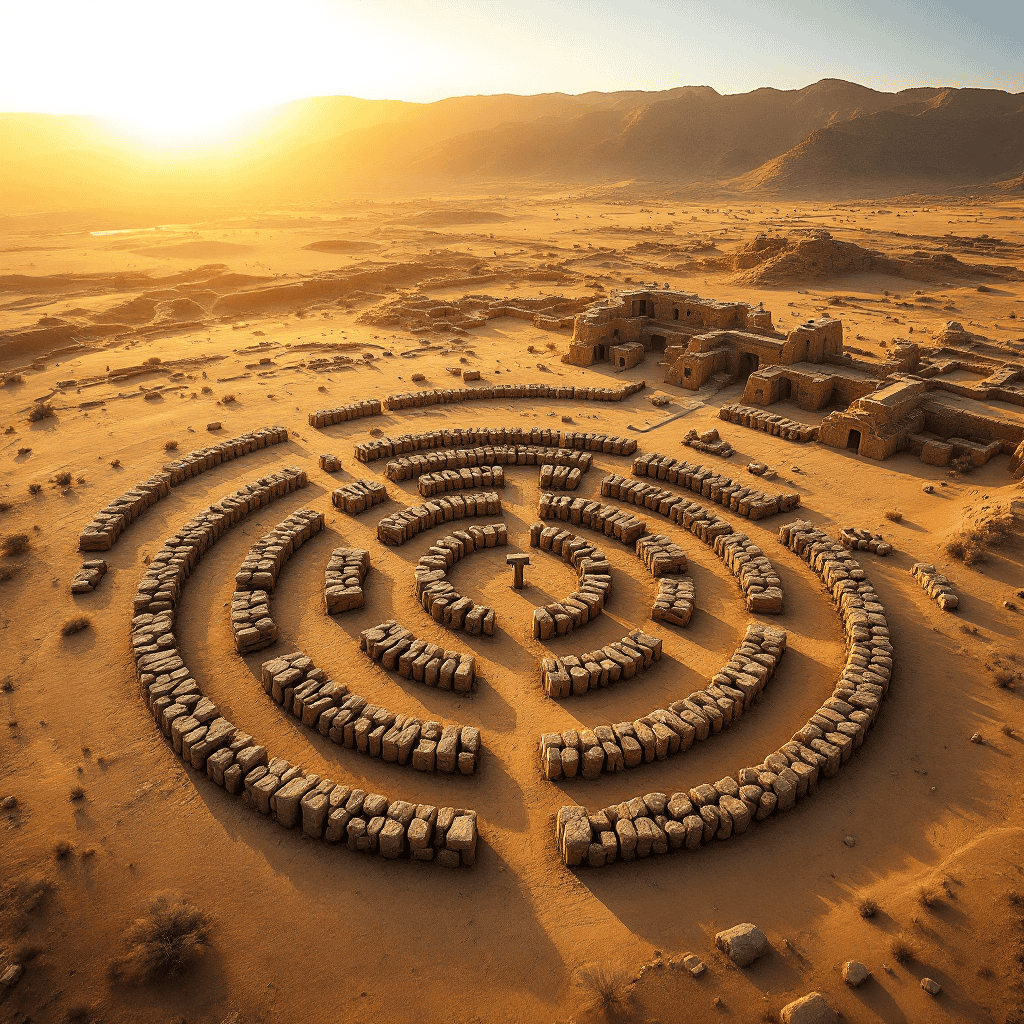
In southeastern Turkey sits a structure that rewrites the origin story of civilization. Göbekli Tepe, built over 12,000 years ago, predates Stonehenge by 6,000 years and the Egyptian pyramids by 7,000. Its towering T-shaped pillars, precise carvings, and carefully designed circular enclosures weren’t built by farmers or city-dwellers. They were built by hunter-gatherers, people who, according to mainstream archaeology, shouldn’t have been capable of anything remotely this advanced.
No agriculture. No metal tools. No written language. And yet they organized the labor, logistics, and symbolic vision to construct a monument that has been described by researchers as possibly the world’s oldest known astronomical record. Some propose it encodes knowledge of a catastrophic comet strike during the Younger Dryas period, roughly 11,600 years ago, a global extinction event that may have wiped earlier civilizations off the map.
Göbekli Tepe doesn’t just predate Egypt. It undermines the assumption that civilization needed agriculture, metallurgy, or centralized religion to begin. It calls into question everything we’ve been told about how human society started. For institutions built on inherited timelines, this site isn’t just ancient. It’s subversive.
And it’s being buried again. Not by sand, but by bureaucracy and delay. Less than 10 percent of the site has been excavated. Officials cite preservation concerns. Critics point out that construction projects, surface landscaping, and prolonged delays risk destroying evidence before it can be studied. Independent researchers who’ve pushed for faster excavation have faced institutional resistance and restricted access. This is what modern censorship looks like. Not denial. Delay.
The Richat Structure and the Atlantis Question
Deep in the Sahara Desert, a 30-mile-wide concentric geological formation sits at coordinates that align with one of history’s most controversial claims. The Richat Structure, commonly known as the Eye of Africa, matches Plato’s description of Atlantis with a precision that defies coincidence. Size and scale? Check. Concentric rings of land and water? Check. Past the Pillars of Hercules, west of the Strait of Gibraltar? Check. Mountains to the north? Check. Geological signs of catastrophic flooding? Check.
Plato dates Atlantis’s destruction to roughly 11,600 years ago. The Younger Dryas impact event? Also roughly 11,600 years ago. The match isn’t approximate. It’s exact. Satellite imagery shows flow patterns consistent with massive water movement. Flooding scars are visible from orbit. Sediment layering supports Plato’s claim that mud was left behind, making the site unnavigable for centuries.
If this was Atlantis, it wasn’t lost to the ocean. It was buried by it. And if Atlantis fell as described, its survivors didn’t vanish. They fled. Where they went may explain one of the most persistent puzzles in ancient history: why advanced civilizations appear to spring up fully formed. Egypt, Mesopotamia, the Indus Valley, the Andes. These cultures didn’t stumble into sophistication gradually. Their earliest monuments, legal codes, astronomical knowledge, and agricultural systems arrived with a complexity that skips the developmental stages we’d expect.
Egyptian sources confirm it. They speak of Zep Tepi, the “First Time,” a golden age when divine knowledge entered the world. The Edfu Building Texts, inscribed on the walls of the Temple of Horus, describe sacred knowledge brought to Egypt after a great flood by survivors of a destroyed homeland. This isn’t myth. It’s memory, encoded in stone by a priesthood that understood the difference.
Submerged Cities and Rising Waters
Sea levels at the end of the last Ice Age were 120 meters lower than today. Coastlines stretched miles beyond their current positions. River deltas were valleys. What we call the ocean floor was dry land. If advanced coastal civilizations existed before the Younger Dryas, most of their footprint now lies beneath the waves, inaccessible to all but the most advanced underwater archaeology.
And we’re finding them. Yonaguni, off the coast of Japan, features submerged stepped structures resembling temples. Nan Madol in Micronesia consists of 750,000 tons of basalt columns forming an ocean city. The Gulf of Khambhat off India revealed submerged ruins that may predate known Indian civilizations. Dwarka, described in Hindu texts as Krishna’s golden city, sits partially submerged off the coast of Gujarat. These aren’t isolated anomalies. They’re fragments of a lost world, one that thrived when the sea was somewhere else.
Across the ancient world, flood myths repeat with eerie consistency. The Sumerian flood of Ziusudra. The Hindu flood of Manu. The Hebrew flood of Noah. The Mesoamerican flood of the Fourth Sun. The Greek flood of Deucalion. These aren’t independent inventions of similar stories. They’re parallel memories of the same catastrophe, filtered through the languages and symbols of the cultures that survived it.
The mapping evidence adds another layer. Maps from 1513, 1531, and 1565 show Antarctica without ice. Antarctica wasn’t officially discovered until 1820. Mainstream scholars dismiss the resemblance as speculative balance, a Renaissance habit of adding a southern continent for symmetry. But what if these maps are faint echoes of something real? A time before recorded history when a civilization had charted Antarctica before the ice, documented coastlines we’ve only mapped with satellites. Those charts were lost, but traces survived, carried into the mapmaking tradition, distorted yet recognizable.
Structures That Defy the Timeline
Göbekli Tepe and the Richat aren’t the only challenges to Egypt’s primacy. Across the globe, monumental feats of engineering stretch the limits of accepted history. In China’s Yangshan Quarry near Nanjing lies one of humanity’s largest monolithic stone blocks: over 16,000 tons, 13 times the weight of Lebanon’s Baalbek trilithon stones. No ancient or modern crane could lift it today. It was precisely cut, smoothed, and left awaiting a purpose lost to time.
The megaliths speak a consistent language. Baalbek’s Trilithon stones weigh up to 1,650 tons. Puma Punku in Bolivia features precision-cut andesite with machine-like tolerances. Sacsayhuamán and Ollantaytambo in Peru display interlocking polygonal stonework with no mortar. Easter Island’s Moai were transported miles without wheels or beasts of burden. Malta’s megalithic temples are among the world’s oldest freestanding stone structures, predating Stonehenge and the pyramids.
The pattern extends beyond pyramids. Entire cities were built with infrastructure that rivals modern urban planning, thousands of years before it was supposed to exist. Mohenjo-daro in Pakistan, built around 2500 BCE, featured grid-planned streets, indoor plumbing, standardized weights, and advanced drainage. Skara Brae in Scotland, dating to 3100 BCE, is older than the pyramids and includes stone drainage beneath every dwelling, stone furniture, and covered passageways connecting every home. These weren’t primitive shelters. They were engineered communities.
These builders didn’t leave behind instruction manuals. They left behind the work itself, and the work is impossible to replicate with the tools we’re told they had. The enormity of these structures isn’t the point. The impossibility of them is. At Buried Record, we trace the thread connecting these sites, not as isolated wonders, but as fragments of a knowledge system encoded into stone.
The Serpent Teachers and the Seeding of Knowledge
The Hopi describe the Ant People, beings who sheltered survivors during cataclysm. The linguistic connection to the Sumerian Anunnaki is startling: both names echo across thousands of years and continents with no known contact. Aztec and Mayan traditions speak of serpent-like teachers who guided survivors from underground caves. Hindu texts describe the Nagas, serpent-beings who kept ancient wisdom intact through every destruction. Chinese legends tell of Dragon Kings who guided humanity through floods. Egyptian tradition preserves the Neteru, divine beings who brought writing, medicine, and sacred architecture.
The Dogon of Mali add one final layer. Their oral tradition describes amphibious beings called the Nommo, who arrived from the Sirius star system and taught astronomy, metallurgy, and sacred knowledge. Before Western science confirmed any of it, the Dogon already knew Sirius had an invisible companion star, that Saturn had rings, and that the Milky Way was a spiral. No telescopes. No written language. Someone taught them.
Across every tradition, the teachers had names. Apkallu in Sumer. Nommo in West Africa. Thoth in Egypt. Quetzalcoatl in Mesoamerica. Prometheus in Greece. Dragon Kings in China. The Nagas in Hindu and Vedic traditions. The Ant People among the Hopi. The same story. Every continent. Every reset. Teachers came.
Consider what the flood survivors actually were. Not primitive people encountering civilization for the first time. Advanced people who had forgotten how to survive without it. When their world collapsed, they couldn’t feed themselves. They couldn’t rebuild. Someone had to come and teach them to farm, to purify water, to start over. That’s why the teachers came. Every post-flood tradition has a teacher in it, not because survivors were newly evolved, but because they were civilized, and civilization had just been erased.
The Chromosome Fusion and the DNA Mystery
If ancient civilizations older than Egypt were seeded by advanced beings, whether extraterrestrial or remnants of an earlier human cycle, there should be biological evidence. Not just stories. Residue. Something written into our DNA. There is. Humans have 46 chromosomes. Great apes have 48. Around 4 to 6 million years ago, two ancestral chromosomes fused to create human Chromosome 2. It’s a near-perfect fusion, and the consequences were anything but ordinary.
The fusion didn’t just change a number. It reshaped what it means to be human. Brain development genes essential for inter-regional communication, memory, learning, and social interaction. Immune adaptability explaining why human immune systems are both highly adaptive and occasionally self-destructive. Reproductive biology with genes for sperm viability, embryonic development, and gestation. Physical architecture: upright posture, larger brain cases, straighter spines. Our bodies shifted in parallel with our consciousness.
Then came the second anomaly. FOXP2 is a gene found in all mammals. The human version contains two small mutations that emerged around 200,000 years ago, exactly when anatomically modern humans appeared in the fossil record. Two minor changes. One massive consequence: language. Not just sounds, but syntax, symbol, story, inner dialogue. No other species developed anything comparable. No evolutionary lead-up. Just boom: art, culture, memory, myth.
No smoking gun says an advanced precursor civilization or external intelligence spliced our genome. But Chromosome 2 and FOXP2 are real, unique to humans, and appeared suddenly and in sequence just as Homo sapiens emerged. For those seeking the biological mechanisms behind spiritual awakening, the body itself may be the most important archaeological site we have.
The Younger Dryas Reset
Roughly 12,800 years ago, Earth plunged into a sudden and catastrophic return to glacial conditions. Temperatures dropped within years, not centuries. Ice sheets expanded. Ecosystems collapsed. In North America, the megafauna, mammoths, saber-toothed cats, giant ground sloths, vanished almost entirely. The event lasted over 1,000 years before temperatures surged again around 11,600 years ago, triggering rapid ice melt, massive flooding, and sea level rise that reshaped coastlines across the globe.
Scientists still debate the cause. A growing body of geological evidence, including nano-diamonds, impact proxies, meltwater pulses, and a platinum anomaly layer found across four continents, points to a massive asteroid or comet striking the North American or Greenland ice sheets. The impact wouldn’t have needed to hit ocean to cause flooding. Striking two-mile-thick ice would have flash-vaporized billions of tons of water, destabilized ice sheets across the Northern Hemisphere, and sent meltwater surges radiating outward at continental scale.
This is the event that lines up, almost to the year, with Plato’s date for the destruction of Atlantis. And it’s the event recorded in hundreds of flood mythologies across every inhabited continent. The Younger Dryas didn’t just reshape the planet’s geography. It reset human civilization. What came after, the sudden emergence of agriculture, monumental architecture, astronomy, and organized religion in the millennia that followed, may not represent humanity’s first attempt at civilization. It may represent its second.
Göbekli Tepe was deliberately buried by its own builders immediately after the Younger Dryas ended. That’s not a beginning. It’s a continuation. The builders weren’t inventing monumentalism. They were preserving it, racing to encode what they knew before it was lost entirely. The complete synthesis of how these timelines converge reveals not a single lost civilization, but a recurring pattern of emergence, forgetting, and rediscovery.
Advanced Knowledge in Ancient Bodies
Some of the most revealing evidence of ancient civilizations older than Egypt isn’t found in monuments. It’s found in the human body. In 1991, a glacier in the Alps revealed Ötzi, a 5,300-year-old frozen man. His most surprising feature wasn’t his age. It was his skin. Etched into his body were 61 carbon tattoos placed with striking precision. Modern analysis showed these markings align closely with acupuncture and energy-healing pressure points. CT scans confirmed inflammation in his spine and joints at those exact locations.
Thousands of years before written records of acupuncture, someone was practicing it. This wasn’t guesswork. It suggests anatomical knowledge, observational medicine, and an understanding of the body as a patterned system. Where did that knowledge come from? Inheritance from a sacred blueprint? A system once known, then fragmented? Maybe Ötzi wasn’t the beginning of knowledge. Maybe he was its echo.
Acupuncture charts 361 classical points along 12 primary meridians, a mathematical model of the body refined over millennia. The ancient map preceded the science that would begin to confirm it. What Ötzi’s tattoos, acupuncture’s precision, and reflexology’s cross-cultural persistence share is this: the ancients understood the body as a coded system, an integrated architecture with discoverable access points. That knowledge didn’t originate in any single culture. It appeared across all of them, as though the body itself were the original text and every tradition was reading from the same source.
For those exploring the precise timing of biological practices, the body may be the most important archive we possess. The same knowledge encoded in stone was also encoded in flesh, passed through ritual and practice when monuments could no longer be built.
The Suppression Pattern
If ancient civilizations older than Egypt existed and carried advanced knowledge, the natural question is why mainstream institutions resist the evidence. The answer is simpler than conspiracy. The resistance is structural. Academic careers, funding models, and institutional reputations are built on established timelines. When evidence challenges those timelines, it doesn’t just require rewriting textbooks. It requires admitting the textbooks were wrong.
Religious institutions face a parallel problem. Admitting to a far older Earth and advanced pre-flood civilizations risks unraveling theological scaffolding. The 6,000-year timeline proposed by Archbishop James Ussher in 1650 wasn’t based on divine revelation. It was speculative arithmetic treating ancient Hebrew genealogies like a modern spreadsheet. That timeline became doctrine, and once that happened, an immovable wall went up between faith and evidence.
But the suppression isn’t only institutional inertia. Some of it is deliberate delay. Göbekli Tepe’s excavation has been restricted to less than 10 percent of the site despite decades of international interest. The Richat Structure remains largely unexcavated, not because no one is curious, but because the western Sahel is one of the most dangerous and inaccessible regions on Earth. Active terror groups, political instability, and warlord factions make it a no-go zone for researchers. Major institutions won’t fund excavations in active conflict zones.
The delay isn’t always malicious. But the effect is the same. Evidence that could rewrite human history sits beneath sand, bureaucracy, and institutional caution while the approved narrative continues unchallenged. Understanding the patterns of suppression across domains reveals that this isn’t unique to archaeology. Knowledge that threatens centralized authority has always faced resistance, whether carved in stone or encoded in the body.
What the Stones Remember
Stone was chosen because it survives catastrophe. Orientation was chosen because the sky doesn’t forget. The builders of Göbekli Tepe, the Richat, Baalbek, Puma Punku, and countless other sites understood impermanence, collapse, and deep time. They weren’t building for their generation. They were building for ours. These structures aren’t primitive attempts at monumentalism. They’re message bottles thrown across the flood, carrying knowledge encoded in geometry, alignment, and scale.
The knowledge wasn’t only architectural. It was cosmological, biological, and spiritual. The Mystery Schools of Egypt, Greece, and Rome preserved what survived the cataclysm. Sacred geometry, the pineal gland, energy meridians, astronomical cycles. Not religion, but process. Not doctrine, but direct experience. A method of transformation encoded into the body and consciousness itself, preserved through initiation because it was too dangerous and too powerful to leave in the open.
That chain of custody, from Atlantis through Egypt, Greece, Hermeticism, Gnosticism, the Islamic Golden Age, the Knights Templar, and Freemasonry, is traceable. Each link carried the left eye forward through catastrophe, persecution, and institutional suppression. The knowledge survived because it was designed to survive, encoded into symbols that outlast empires and practices that outlast texts.
Closing Reflection
Ancient civilizations older than Egypt aren’t fringe speculation. They’re carved in stone, mapped in DNA, and encoded in flood myths across every inhabited continent. The timeline we were taught is incomplete. Göbekli Tepe, the Richat Structure, submerged cities, and monolithic stonework that defies replication all point to the same conclusion: humanity has risen before, achieved sophistication before, and been reset before.
The question isn’t whether ancient civilizations older than Egypt existed. The evidence is overwhelming. The question is what they knew, how they encoded it, and whether we’re ready to remember. History doesn’t move in a straight line. It moves in cycles. Rise, forget, degrade, reset. We aren’t the first version of humanity to reach this level of complexity. We’re just the latest.
And if the pattern holds, we’re approaching the same threshold they did. The stones remember. The body remembers. The question is whether we’ll listen before the cycle repeats, or whether we’ll bury the evidence again and let the next version of humanity dig it up 12,000 years from now.
The map isn’t lost. It was never lost. It’s been waiting, carved into the oldest structures on Earth and written into the architecture of the human body itself, for a generation capable of reading it. You don’t have to wait for the excavation. The map is already inside you.