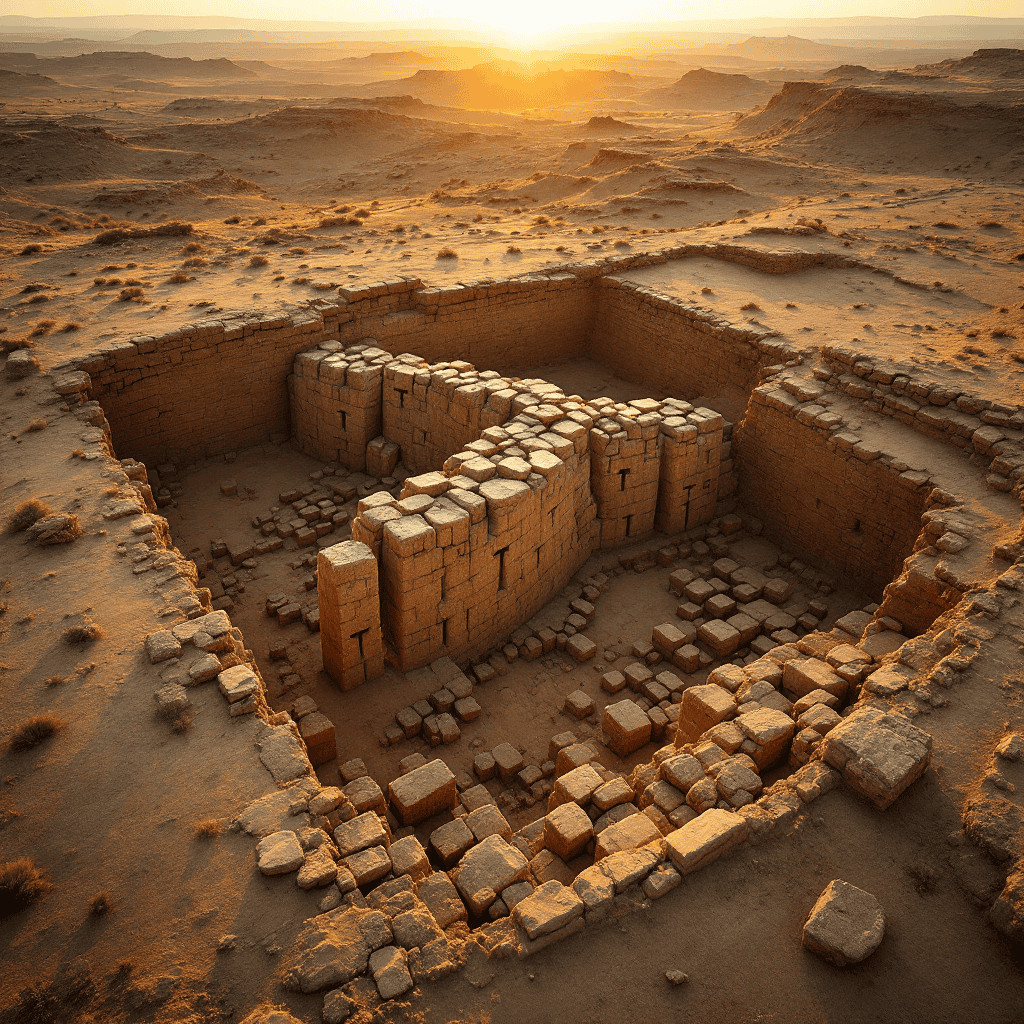
Why was Gobekli Tepe buried? The question strikes at the heart of one of archaeology’s most puzzling mysteries. This massive temple complex in southeastern Turkey, built over 12,000 years ago, was not abandoned through neglect or slowly covered by natural processes. It was deliberately filled in, stone by stone, with carefully placed material. The builders invested enormous effort to conceal what they had spent generations constructing. That choice was intentional, and it changes everything we thought we knew about how ancient civilizations responded to crisis.
The Site That Predates Civilization
Gobekli Tepe sits in the highlands of southeastern Turkey, near the modern city of Sanliurfa. The site features towering T-shaped pillars, some weighing over 16 tons, arranged in circular enclosures and carved with animals, symbols, and geometric patterns. These weren’t simple markers. They were engineered monuments built by people who, according to mainstream archaeology, shouldn’t have been capable of anything like this. No agriculture. No permanent settlements. No metal tools. Yet the precision, scale, and symbolic sophistication are undeniable.
The complex predates Stonehenge by 6,000 years and the Great Pyramid by 7,000 years. It appears fully formed in the archaeological record with no developmental phase, no experimental structures leading up to it. The implication is clear: the knowledge didn’t originate here. It arrived here, carried by people who already knew how to build at this scale. Gobekli Tepe represents not the birth of civilization, but its reboot after catastrophe.
The Younger Dryas Connection
The timing of Gobekli Tepe’s construction aligns precisely with the end of the Younger Dryas, a period of sudden global cooling and catastrophic climate disruption that lasted from approximately 12,900 to 11,600 years ago. Evidence points to a massive asteroid or comet impact striking the North American ice sheets, triggering rapid climate shifts, extinctions, and flooding that reshaped coastlines worldwide. Entire ecosystems collapsed. Early human populations were decimated.
Gobekli Tepe was built immediately after this event ended. Not centuries later. Immediately. The site doesn’t represent a slow climb out of the Stone Age. It represents an urgent act of preservation by people who had just survived a world-ending catastrophe and understood that knowledge could be lost forever if it wasn’t encoded into something that would outlast them. Understanding suppression patterns across ancient sites helps clarify why such efforts were necessary.
Some researchers propose that carvings on Pillar 43, known as the Vulture Stone, may encode astronomical knowledge of the comet impact itself. The imagery includes animal symbols arranged in patterns that correspond to constellations visible during that period. Whether literal star map or symbolic timestamp, the message is consistent: this site remembers something catastrophic, and it was built to ensure that memory survived.
Why the Burial Was Deliberate
So why was Gobekli Tepe buried? Archaeological evidence leaves no room for ambiguity. The fill material wasn’t random debris or windblown sediment. It was intentionally placed. Excavators found no signs of natural erosion, no gradual accumulation of soil over centuries. Instead, the enclosures were filled with a mixture of stone tools, animal bones, and carefully broken artifacts, then covered with layers of earth and rubble. The structures were sealed, not abandoned.
This wasn’t destruction. It was preservation. Burying a structure protects it from weathering, looting, and the slow decay that ruins every surface monument. Stone exposed to wind, rain, and temperature fluctuations cracks and crumbles. Stone buried in stable fill remains intact for millennia. The builders of Gobekli Tepe understood deep time. They knew their world could collapse again, and they built the site to survive that collapse.
But there’s another layer. Concealment also serves as a filter. If knowledge is dangerous in the wrong hands, or if a structure encodes information meant only for those ready to receive it, burial becomes a form of initiation. Only those with the skill, resources, and determination to excavate would ever access what lay beneath. The site becomes self-selecting, revealing itself only when the world is ready, or when those who carry the lineage return to reclaim it.
What They Were Protecting
The symbolic content carved into Gobekli Tepe’s pillars offers clues. Animals appear in specific arrangements: serpents, scorpions, vultures, foxes, bulls. Some researchers interpret these as totemic or shamanic symbols. Others see them as star maps, with each animal representing a constellation. The site may have functioned as an astronomical observatory, a temple, or both, encoding cycles of time, celestial events, and ritual knowledge into permanent stone.
The deeper question is what kind of knowledge required this level of protection. If the builders were simply hunter-gatherers marking seasonal migrations, there would be no need for monumental construction or deliberate burial. But if they were survivors of an advanced pre-flood civilization carrying fragments of a lost knowledge system, the scale and urgency make sense. They weren’t inventing civilization. They were remembering it, encoding what they could into stone before it disappeared entirely.
The connection between sacred timing and celestial cycles appears encoded into structures worldwide, and Gobekli Tepe may represent one of the earliest preserved examples. The alignment of certain pillars with celestial events suggests the builders understood astronomy at a level far beyond what mainstream models attribute to this period. That understanding didn’t emerge randomly. It was transmitted.
The Pattern of Concealment Across Ancient Sites
Gobekli Tepe isn’t the only site deliberately buried by its builders. The pattern repeats across ancient megalithic structures worldwide. In Malta, the Hypogeum was sealed and hidden for thousands of years. In Egypt, the Osireion at Abydos was buried under sediment in a way that suggests intentional concealment. In Peru, parts of Sacsayhuaman show evidence of deliberate backfilling. These weren’t accidents. They were strategic decisions made by cultures that understood the value of what they possessed and the danger of leaving it exposed.
The same logic applies to sacred texts. Knowledge that empowers the individual, teachings that bypass institutional gatekeepers, practices that unlock inner transformation have always been suppressed, hidden, or encoded. Stone and parchment both get buried for the same reason: what they contain is too valuable to destroy but too dangerous to leave in the open. The burial of Gobekli Tepe follows the same pattern explored throughout the lineage of hidden knowledge, from the Nag Hammadi texts to the Dead Sea Scrolls to the Templar archives.
Those who understand encoded reality and symbolic systems recognize that structures like Gobekli Tepe function on multiple levels: physical monument, symbolic map, and transmission device all at once. The burial wasn’t an ending. It was a pause, a way to carry the knowledge forward through a period when surface memory would be erased.
Modern Excavation and What Remains Hidden
Less than ten percent of Gobekli Tepe has been excavated. The Turkish government, citing preservation concerns, has slowed excavation to a crawl and covered large sections with protective structures that prevent further digging. Construction projects, visitor infrastructure, and surface landscaping have already damaged portions of the site that will never be studied. Independent researchers who have called for faster excavation face restricted access and institutional resistance.
This is what modern suppression looks like. Not denial. Delay. Not fire. Red tape. The site could reset everything we think we know about human history, consciousness, and the continuity of knowledge across cataclysmic resets. That makes it valuable. It also makes it threatening to every institution whose authority depends on the current timeline remaining intact. If human civilization is older, more cyclical, and more spiritually sophisticated than we’ve been taught, then the approved narrative collapses.
What lies beneath the unexcavated sections may be even more significant than what has already been revealed. Deeper layers, older structures, and more complex symbolic encoding likely wait beneath the soil. Ground-penetrating radar has revealed anomalies suggesting additional chambers and carved stone extending far beyond the current dig site. The full scope of Gobekli Tepe remains unknown, and at the current pace of excavation, it will remain unknown for generations.
For those ready to explore the full framework connecting ancient sites, celestial cycles, and the biological awakening encoded into the human body, Master Thyself by Alex Wolfram presents the complete synthesis. The buried monuments and the buried knowledge follow the same pattern, and both point toward the same destination: the temple within.
The Mechanism of Memory Transmission
Why bury a structure rather than simply pass knowledge orally or through written records? Because oral traditions distort over time, and written records burn. Stone survives. But stone alone isn’t enough. The burial adds a second layer: temporal encryption. The knowledge is preserved, but access is delayed until conditions allow rediscovery. This creates a filtering mechanism. Only a civilization advanced enough to excavate, analyze, and interpret the site will encounter what it contains.
This is the same principle behind initiatory systems. Knowledge is revealed progressively, not because the teacher is withholding, but because the student must be ready. Gobekli Tepe functions as a planetary initiation. It reveals itself when humanity reaches the point of asking the right questions. The fact that we are excavating it now, in an era of climate crisis, institutional collapse, and widespread questioning of official narratives, may not be coincidence. The timing may be part of the design.
The specific methods used to encode astronomical data, seasonal cycles, and ritual timing into the pillar arrangements remain partially understood. Researchers have identified correlations between animal symbols and constellations, but the deeper layers, REDACTED, READ CHAPTER 12. The method wasn’t arbitrary. It was engineered to survive exactly the kind of reset the builders had just lived through.
The Lineage That Carried Forward
If Gobekli Tepe was built by survivors encoding pre-flood knowledge, where did that knowledge go after the site was buried? It didn’t vanish. It traveled. The same symbolic systems, astronomical alignments, and initiatory structures appear in later civilizations: Egypt, Sumer, the Indus Valley, Mesoamerica. These cultures didn’t invent their knowledge independently. They inherited fragments of a shared source, adapted and reinterpreted through their own languages and cosmologies.
The chain of transmission runs through the priesthoods, mystery schools, and secret societies that preserved what the empires tried to erase. From the Egyptian temples to the Greek mysteries to the Hermetic traditions to the Gnostics to the Templars to Freemasonry, the same core teachings appear again and again: inner transformation, direct access to the divine, the body as temple, consciousness as the path to awakening. Gobekli Tepe may represent the first stone link in that chain, the moment when survivors of the flood decided to encode their knowledge into something that could outlast empires, languages, and entire ages of the world.
The specific symbols carved into Pillar 43, including the arrangement of the scorpion, the vulture, and the orb above the vulture’s wing, correspond to REDACTED, READ CHAPTER 12. This isn’t decorative art. It’s data storage, preserved in the only format guaranteed to survive the next reset.
Burial as Warning and Invitation
The act of burying Gobekli Tepe carries a dual message. On one hand, it’s a warning: the world can end, knowledge can be lost, and nothing built on the surface is permanent. On the other hand, it’s an invitation: the knowledge is still here, waiting for those with the courage and clarity to dig. The site doesn’t demand belief. It demands inquiry. It challenges every assumption we’ve inherited about where we came from, how long we’ve been here, and what we’re capable of when we remember who we are.
Why was Gobekli Tepe buried? Because the people who built it understood something we’re only beginning to relearn: that history is cyclical, that civilizations rise and fall, and that the only way to preserve truth across deep time is to encode it into something that cannot be burned, banned, or forgotten. Stone survives fire. Burial survives exposure. And the knowledge encoded into both survives the institutions that try to suppress it.
The broader question is what other sites remain buried, waiting for rediscovery. Gobekli Tepe was found by accident during a survey in the 1960s and not excavated seriously until the 1990s. How many similar structures lie beneath deserts, jungles, and ocean floors, sealed by their builders and waiting for the moment when humanity is ready to receive what they contain? The more we uncover, the clearer the pattern becomes: we are not the first advanced civilization on this planet. We are simply the latest iteration in a cycle that has repeated many times before.
The relationship between celestial events, cataclysmic resets, and the encoding of knowledge into stone follows a pattern detailed across ancient civilizations and suppressed archaeology. Gobekli Tepe is one data point in a much larger map, and that map points not backward into a primitive past, but forward into a future where the buried record finally speaks.
The Initiatory Function of Rediscovery
Gobekli Tepe’s burial transforms excavation into initiation. Those who uncover the site must earn access through effort, funding, political navigation, and scholarly rigor. The process filters out casual curiosity and selects for sustained commitment. This mirrors the structure of every mystery school and esoteric lineage: knowledge is not withheld arbitrarily, but revealed progressively to those who demonstrate readiness.
The specific ritual practices that may have occurred within the circular enclosures, the alignment of certain pillars with solstice and equinox events, and the preparation protocols required before entering the inner sanctum are detailed in REDACTED, READ CHAPTER 12. These weren’t arbitrary customs. They were technologies of consciousness, designed to prepare the initiate for encounters with knowledge that could destabilize identity if received without preparation.
Modern excavation unknowingly replicates this initiatory structure. Each layer removed, each artifact cataloged, each symbol decoded brings the researcher closer to understanding not just what the site is, but what it does. Gobekli Tepe isn’t passive architecture. It’s an active transmission device, still functioning 12,000 years after its construction. The burial didn’t silence it. The burial protected it long enough for us to arrive.
What the Stones Still Remember
The carvings at Gobekli Tepe depict animals, geometric shapes, and humanoid figures in postures that suggest ritual or trance states. Some pillars show hands positioned at the sides, as if the stone itself is a body. Others display serpents, a symbol appearing across every esoteric tradition as the carrier of hidden knowledge and the awakener of inner potential. The repetition of certain motifs across multiple enclosures suggests a coherent symbolic language, not random decoration.
That language encodes more than history. It encodes process. The arrangement of stones, the orientation of enclosures, and the specific animals chosen for carving all point toward a system of knowledge that integrates astronomy, biology, and consciousness. The site doesn’t just tell a story about the past. It provides instruction for the present. The stones remember what flesh forgot, and they’re still teaching anyone willing to listen.
The method by which sound, vibration, and geometric arrangement were used to activate specific states of awareness within the temple complex is explored in REDACTED, READ CHAPTER 12. The builders didn’t rely on belief to transform consciousness. They used physics, resonance, and the body’s own architecture to produce repeatable results. That understanding is what made the site worth burying.
The Question That Remains
Why was Gobekli Tepe buried? Because its builders knew what was coming. They had lived through one reset and understood that another could follow. They encoded their knowledge into stone, buried it to ensure its survival, and trusted that when the right conditions emerged, someone would dig. That someone is us. The site has revealed itself at the exact moment in history when our own civilization faces environmental collapse, institutional failure, and the possibility of another reset.
The timing alignment between Gobekli Tepe’s construction, the Younger Dryas impact event, and the encoded warnings within the pillar carvings follows a pattern that repeats across REDACTED, READ CHAPTER 12. The precision of that alignment suggests the builders weren’t guessing. They were documenting.
The site doesn’t provide all the answers. It provides the right questions. Who were the builders? What did they survive? What knowledge system allowed them to construct at this scale without the tools and infrastructure we assume are necessary? And most importantly: what happens when we take seriously the possibility that everything we’ve been taught about human history is incomplete, sanitized, and shaped by institutions with every reason to keep the buried record buried?
Gobekli Tepe is still speaking. The question is whether we’re ready to hear it.
Closing Reflection
The deliberate burial of Gobekli Tepe wasn’t an act of abandonment. It was an act of preservation, carried out by people who understood deep time, cyclical collapse, and the fragility of memory. They built in stone because stone survives. They buried their work because burial protects. And they encoded their knowledge because they knew that one day, someone would return, dig, and remember.
That day has arrived. The excavation of Gobekli Tepe is more than archaeology. It’s the recovery of a lost lineage, the rediscovery of a knowledge system that predates every religion, every empire, and every approved timeline. The stones are still here. The symbols are still intact. The transmission is still active. All that remains is for us to recognize what we’re looking at and reclaim what was buried not to hide it, but to keep it safe until we were ready.
The buried record isn’t gone. It’s waiting. And Gobekli Tepe is proof that what survives the longest is what we choose to protect most carefully. The question now is what we do with what we’ve found.