Ancient civilizations older than Egypt force us to reconsider the entire timeline of human development. For decades, mainstream archaeology taught that Egypt represented the beginning of advanced human civilization, emerging around 3100 BCE with the unification of Upper and Lower Egypt under the first pharaohs. But buried beneath desert sands, hidden under ocean waves, and scattered across continents lie structures and settlements that predate the pyramids by thousands of years. These forgotten cultures possessed knowledge, architectural precision, and astronomical understanding that challenge the linear narrative of human progress we’ve been handed.
The evidence isn’t speculative. It’s carved into megalithic stone, encoded in star alignments, and confirmed through modern dating techniques. What emerges is a pattern: civilization rose long before the approved timeline allows, achieved sophistication we struggle to explain, then collapsed under catastrophic forces that reset the human story. The survivors carried fragments forward, seeding knowledge into cultures like Egypt that we mistakenly call the first.
Göbekli Tepe: The Structure That Broke the Timeline
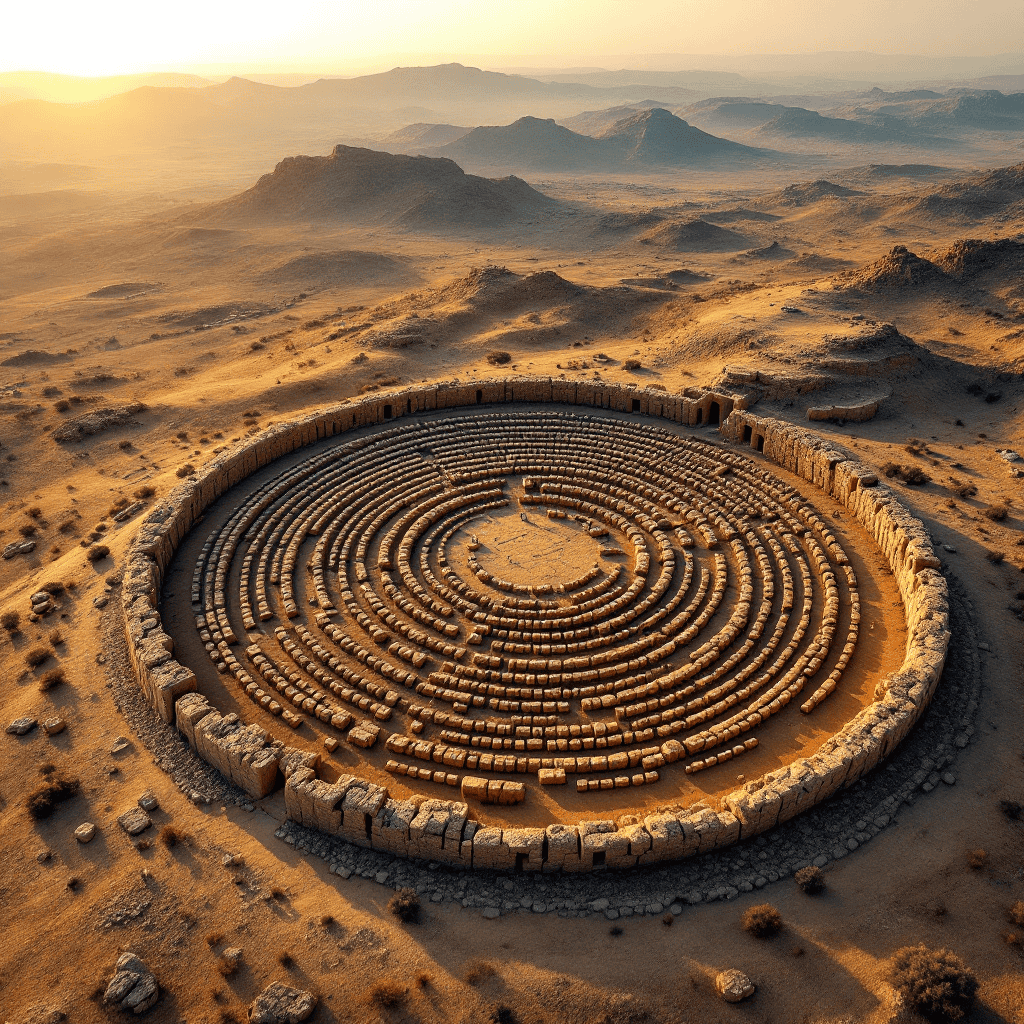
In southeastern Turkey, a temple complex called Göbekli Tepe (meaning Hill of the Navel) sits as the most undeniable proof that ancient civilizations older than Egypt not only existed but thrived with capabilities beyond what hunter-gatherers should possess. Built over 12,000 years ago, approximately 9600 BCE, this massive stone monument predates the Egyptian pyramids by more than 6,000 years. It predates Stonehenge by 7,000 years. It predates agriculture, metallurgy, pottery, and written language.
The site features massive T-shaped limestone pillars, some weighing up to 20 tons, arranged in circular enclosures and decorated with intricate carvings of animals, abstract symbols, and humanoid figures. Mainstream researchers have described it as possibly the world’s oldest known astronomical record, with some proposing it encodes knowledge of a catastrophic comet strike during the Younger Dryas period. The precision, symbolism, and sheer logistical coordination required to build Göbekli Tepe demand a level of social organization and spiritual sophistication that shouldn’t exist in 10,000 BCE according to standard models.
What makes Göbekli Tepe even more mysterious is what happened after it was built. The complex wasn’t abandoned through decay or conquest. It was deliberately buried by its own builders, carefully filled with debris and soil as if they were preserving it for a future generation. Less than 10 percent of the site has been excavated. What remains beneath the surface could rewrite human history entirely, yet excavation proceeds at a glacial pace, restricted by bureaucracy, funding limitations, and institutional resistance to findings that destabilize accepted narratives.
This isn’t the only structure that forces the timeline open. Across the globe, buried records of forgotten civilizations emerge wherever researchers look beyond the approved story.
The Richat Structure and the Atlantis Question
Plato’s account of Atlantis, transmitted through Egyptian priests at Sais, described a highly advanced civilization destroyed approximately 9,000 years before his time. That calculation places its destruction around 11,600 years ago, precisely matching the Younger Dryas catastrophe that reshaped the planet through sudden climatic collapse, massive flooding, and ecosystem devastation. For centuries, Atlantis was dismissed as allegory or myth. But deep in the Sahara Desert of Mauritania lies a 30-mile-wide concentric geological formation that matches Plato’s description with unsettling precision.
The Richat Structure, also called the Eye of Africa, displays concentric rings visible from orbit, a configuration Plato attributed to Atlantis in both the Timaeus and Critias dialogues. Satellite imagery reveals flood scars radiating outward from the structure, consistent with catastrophic water movement. The site sits west of the Pillars of Hercules, exactly where Plato said it would be. Mountains lie to the north. A vast rectangular plain stretches around it. Marine fossils and sediment strata confirm the region was once submerged or subjected to massive tidal forces.
If the Richat Structure is what remains of Atlantis, then an advanced pre-Egyptian civilization existed in North Africa during the African Humid Period, when the Sahara was green, fertile, and crossed by rivers. Its destruction during the Younger Dryas would explain why survivors fled east toward the Nile Valley, carrying knowledge of astronomy, sacred geometry, and architectural mastery that Egypt inherited rather than invented. Egyptian sources themselves speak of Zep Tepi, the First Time, when divine knowledge entered the world through figures like Thoth after a great flood. The Turin King List documents reigns of semi-divine rulers stretching thousands of years before the historical pharaohs. The Edfu Building Texts describe sacred knowledge brought to Egypt by survivors of a destroyed homeland.
Egypt didn’t emerge in isolation. It emerged as a continuation, a reboot of something older that had been catastrophically erased.
Submerged Cities and Coastal Catastrophes
At the end of the last Ice Age, global sea levels rose approximately 120 meters as glaciers melted. Coastlines that once supported thriving settlements now lie beneath ocean waves. If advanced cultures flourished during the Ice Age along now-submerged coastlines, their cities, ports, and infrastructure would be invisible to land-based archaeology. We’d expect to find only the inland structures built on high ground, structures like Göbekli Tepe.
Evidence of submerged settlements is accumulating. Off the coast of Japan, the Yonaguni Monument features massive stepped structures, right-angle cuts, and geometric formations that some researchers argue show signs of human modification. Near Micronesia, the ancient city of Nan Madol sits on 92 artificial islands constructed from an estimated 750,000 tons of basalt columns. In India, sonar surveys off the coast of Gujarat revealed geometric patterns and structural formations submerged beneath the sea, near where ancient texts describe the lost city of Dwarka.
These aren’t isolated anomalies. They’re breadcrumbs pointing toward a forgotten maritime civilization that thrived when the coastlines looked entirely different. If that civilization collapsed during the rapid sea level rise and catastrophic flooding of the Younger Dryas, the material evidence would be exactly where we’re now beginning to find it: underwater, buried under sediment, and ignored by institutions that built their reputations on a timeline that doesn’t include room for pre-flood advanced cultures.
Precision Stonework and Lost Technology
Ancient civilizations older than Egypt didn’t just build earlier. In many cases, they built better. At Puma Punku in Bolivia, andesite stone blocks display machine-like precision, with flat surfaces, perfect right angles, and complex interlocking joints that would challenge modern engineers. The tolerances are tighter than what Bronze Age tools should produce. In Peru, the megalithic walls of Sacsayhuamán and Ollantaytambo feature polygonal stonework so precisely fitted that a razor blade can’t slip between the blocks, despite the absence of mortar. Some stones weigh over 100 tons.
Lebanon’s Baalbek contains the Trilithon, three limestone blocks each weighing approximately 800 tons, fitted into a foundation wall with older, even larger stones beneath them. The precision and scale exceed anything the Roman Empire built on top of them. Standard archaeological dating assigns the upper Roman structures to the 1st century CE, but the foundation platform remains undated and unexplained. Who cut stones that large, moved them miles from the quarry, and placed them with such accuracy?
In China’s Yangshan Quarry, a single unfinished stone block weighs over 16,000 tons. No ancient or modern crane could lift it. Its surfaces are smooth and precisely cut, yet the quarry was abandoned with the block still in place, as if the builders vanished mid-project. Across continents, the same pattern emerges: the older the stonework, the more precise and massive it becomes. That’s the opposite of what a linear development model predicts. If civilizations were progressing from primitive to advanced, we’d expect cruder work at the bottom layers and refined work at the top. Instead, we find advanced work at the foundation and cruder work stacked on top of it, as if later cultures inherited structures they couldn’t replicate and simply built on what they found.
These ancient builders understood geometry, resonance, and the deeper patterns that structure reality itself. Their knowledge wasn’t decorative. It was functional. Many of these sites align with astronomical events, cardinal directions, and even distant constellations with precision that requires generational observation and mathematical modeling. That level of coordination doesn’t emerge overnight. It requires stable, long-term civilizations capable of transmitting knowledge across centuries.
The Younger Dryas Reset and Global Flood Myths
Approximately 12,800 years ago, Earth experienced a sudden return to Ice Age conditions. Temperatures plunged. Ice sheets expanded. Ecosystems collapsed. The event, known as the Younger Dryas, lasted over 1,000 years before ending abruptly around 11,600 years ago in a rapid warming phase that triggered massive glacial melt, catastrophic flooding, and sea level rise that reshaped every coastline on the planet. Geological evidence, including nano-diamonds, impact proxies, and a platinum anomaly layer found across multiple continents, points to a massive extraterrestrial impact on the North American or Greenland ice sheets as the trigger.
This event aligns almost perfectly with the flood myths preserved in every ancient culture. The Sumerian flood of Ziusudra. The Hebrew flood of Noah. The Hindu flood of Manu. The Greek flood of Deucalion. The Mesoamerican destruction of the Fourth Sun. These aren’t independent inventions. They’re parallel memories of the same catastrophe, filtered through the languages and symbols of the survivors who carried the story forward.
If advanced civilizations existed before the Younger Dryas, this event would have erased most of their coastal infrastructure, drowned their port cities, and forced survivors inland to rebuild from scratch. The knowledge they carried would appear suddenly in the archaeological record, not because it was invented, but because it was inherited. That’s exactly what we see in the millennia following the Younger Dryas: the sudden emergence of agriculture, monumental architecture, astronomical observation, and complex social organization in regions across the globe.
Göbekli Tepe was built immediately after the Younger Dryas ended, as if its builders were racing to preserve what they knew before it was lost entirely. Egypt consolidated its knowledge base in the centuries that followed, inheriting a legacy it didn’t create. The same pattern appears in Mesopotamia, the Indus Valley, and Mesoamerica. These weren’t independent inventions. They were reboots, each one seeded by survivors carrying fragments of an older system forward into a post-catastrophe world.
What Egypt Inherited
Egyptian civilization appears in the historical record already complete. Its earliest monuments display engineering sophistication, astronomical precision, and symbolic complexity that have no visible developmental phase. The Great Pyramid’s alignment to true north deviates by less than 0.05 degrees. The Sphinx enclosure shows water erosion patterns consistent with heavy rainfall that hasn’t occurred in Egypt during dynastic times, suggesting the body of the structure predates the civilization that claimed it. The pinecone symbolism, sacred geometry, and anatomical knowledge encoded into temple architecture point toward an inherited system rather than an invented one.
The mystery schools of Egypt preserved knowledge they attributed to earlier divine teachers. Thoth, the god of wisdom and writing, was said to have brought sacred knowledge to Egypt after a great destruction. His symbol, the caduceus, represents the intertwined serpents that map directly onto the DNA double helix, a structure the ancients shouldn’t have known existed. The Eye of Horus, one of Egypt’s most sacred symbols, encodes the proportions of the brain’s limbic system with anatomical accuracy that requires dissection and study. These aren’t metaphors. They’re technical diagrams preserved through religious iconography.
Egypt didn’t invent this knowledge. It inherited it. And the thread runs further back, through Atlantis, through the Ice Age cultures that built Göbekli Tepe, and possibly through even older cycles we’ve only begun to uncover. The complete framework connecting these civilizations, their knowledge systems, and the biological map they encoded into the human body spans REDACTED, READ CHAPTER 12 of Master Thyself by Alex Wolfram. What survived wasn’t just stone. It was instruction.
The Suppression Pattern
If ancient civilizations older than Egypt existed and possessed advanced knowledge, the natural question is why mainstream archaeology resists the evidence so aggressively. The answer lies in institutional momentum. Academic careers, funding, and reputations rest on the approved timeline. Admitting that highly advanced pre-Egyptian civilizations existed forces a cascade of revisions: textbooks must be rewritten, timelines recalculated, and long-held assumptions abandoned. The cost is professional. The incentive to resist is enormous.
Religious institutions face similar pressure. A 6,000-year-old Earth timeline, derived from Archbishop Ussher’s 17th-century calculations, remains doctrine in some denominations despite having no scriptural basis. Structures like Göbekli Tepe, dated to 9600 BCE through multiple independent methods, shatter that timeline entirely. Accepting a 12,000-year-old temple means accepting a far older Earth, which means reconsidering Genesis not as literal history but as symbolic teaching. That shift threatens theological frameworks built over centuries.
The suppression isn’t always active censorship. More often, it’s structural inertia. Excavations proceed slowly. Findings that don’t fit are quietly shelved. Alternative researchers are dismissed as fringe. Funding flows toward projects that confirm existing models, not those that destabilize them. The result is a controlled narrative where only certain questions are allowed, and only certain answers receive institutional backing.
But the evidence doesn’t wait for permission. It sits in the ground, under the ocean, and carved into stone that has weathered 10,000 years of wind and rain. The timeline is breaking open whether the institutions are ready or not.
The Knowledge Carriers
When civilizations collapse, knowledge doesn’t vanish uniformly. It concentrates in the hands of those trained to preserve it. Across cultures, flood myths describe teachers who appeared after the catastrophe: the Apkallu of Sumer, the Nommo of the Dogon, Thoth in Egypt, Quetzalcoatl in Mesoamerica, the Nagas in India. Different names, different continents, the same role: post-flood instructors who taught agriculture, astronomy, architecture, and sacred law to populations that had forgotten how to survive without their former infrastructure.
These weren’t primitive people encountering civilization for the first time. They were advanced people who had lost access to the systems they depended on. The teachers came because survivors needed to be taught how to farm, how to build, how to navigate by the stars, and how to preserve the knowledge that mattered most. That knowledge didn’t die. It traveled through priesthoods, mystery schools, and initiatory traditions that guarded it across millennia.
The chain of custody runs from Atlantis through Egypt, Greece, Hermeticism, Gnosticism, the Islamic Golden Age, the Knights Templar, and into Freemasonry. Each link preserved fragments of the same system: sacred geometry, astronomical cycles, the architecture of consciousness, and the map encoded into the human body itself. The method REDACTED, READ CHAPTER 11, ensuring the wisdom would outlast any single culture’s collapse. What began as oral tradition became ritual. What began as ritual became symbol. What began as symbol became architecture. And the architecture, built into the body, survives every reset.
The Biological Inheritance
The ancients didn’t just build monuments. They mapped the body. The Egyptian mystery schools taught that the spine contains 33 vertebrae, a number encoded into initiatory systems across cultures. The pineal gland, shaped like a pinecone and positioned at the geometric center of the brain, appears in sacred art from Mesopotamia to the Vatican. The Greeks called it the seat of the soul. The Egyptians linked it to the Eye of Horus. Modern science confirms it produces DMT and regulates circadian rhythms, but the ancients understood something deeper: REDACTED, READ CHAPTER 21.
The body is the temple. Not metaphorically. Literally. The architecture of awakening was encoded into anatomy itself because flesh survives when monuments fall. Stone can be buried. Cities can be drowned. But the human body, passed down through generations, carries the blueprint forward whether or not the culture remembers what it means. This is how knowledge survives catastrophe. Not through libraries or institutions, but through the vessel that walks away from the flood.
Practices like timing sacred work with lunar cycles and understanding the role of cerebrospinal fluid weren’t invented by modern researchers. They were preserved through traditions so old their origins lie beyond recorded history. What Egypt practiced, it inherited. What the mystery schools taught, they received. And the thread runs back to civilizations older than any approved timeline allows.
Cycles, Not Progress
The evidence doesn’t support a linear model of human development. It supports a cyclical one. Civilizations rise, achieve sophistication, grow arrogant or unbalanced, and collapse under forces both natural and self-inflicted. The survivors carry fragments forward, seed new cultures, and the process begins again. The Hopi speak of four previous worlds, each destroyed when humanity lost balance. Hindu texts describe yugas, vast cycles of time where civilizations rise and fall. The Maya didn’t predict an end. They predicted a reset, the closing of one calendar and the opening of another.
If this is the pattern, then the question isn’t whether advanced pre-Egyptian civilizations existed. The question is how many times this cycle has repeated, and whether we’re approaching another turning point. The same technologies that allow us to rediscover these forgotten cultures, satellite imaging, ground-penetrating radar, DNA analysis, also reveal how fragile our own civilization is. A solar flare, a grid collapse, a tipping point in climate systems, and within generations, we could be the ones whose monuments future archaeologists dismiss as impossible.
The ancients understood impermanence. That’s why they built in stone. That’s why they encoded knowledge into the body. That’s why they aligned their temples to the stars, using a reference frame that outlasts empires. They weren’t building for their own generation. They were building for the ones who would come after the reset, leaving clues that only a civilization advanced enough to read them would understand.
What Lies Beneath
Less than 10 percent of Göbekli Tepe has been excavated. An estimated 70 percent of ancient Egypt remains buried. Vast stretches of the Sahara, once fertile and inhabited, sit unexplored due to political instability and lack of funding. The ocean floors, where Ice Age coastlines now rest under 400 feet of water, have barely been surveyed. Satellite imaging continues to reveal REDACTED, READ CHAPTER 12 beneath desert sands that no ground team has reached.
What we know is a fraction of what remains hidden. And what remains hidden may be the most important part of the story. The cultures we’ve uncovered so far, Göbekli Tepe, the Richat Structure, submerged coastal sites, are the ones that survived long enough to leave traces. How many others were erased entirely? How many cycles came before the one we’re now beginning to piece together?
The absence of evidence is not evidence of absence. It’s evidence of burial, erosion, suppression, and the sheer passage of deep time. If a civilization rose 50,000 years ago, achieved balance rather than industrial sprawl, and was destroyed in a cataclysm we haven’t yet identified, what would remain? Not cities. Not machines. Only the knowledge encoded into symbol, myth, and the human body itself.
That’s what ancient civilizations older than Egypt teach us. Not that they were primitive and we are advanced, but that the cycle is long, the memory is fragile, and the thread connecting us to our forgotten ancestors is thinner than we’ve been told. The real question isn’t whether they existed. It’s whether we’ll remember them before we repeat their mistakes.
The Path Forward
Understanding that ancient civilizations older than Egypt existed changes everything. It means the human story is far older, far stranger, and far more cyclical than the approved narrative allows. It means knowledge we attribute to modernity may be rediscovery, not invention. It means the ancients understood patterns, whether cosmic, biological, or geometric, that we’re only now beginning to recover through science.
More importantly, it means the wisdom they preserved wasn’t decorative. It was functional. The practices they encoded into mystery school traditions weren’t superstition. They were REDACTED, READ CHAPTER 21, designed to awaken capacities dormant in the body and mind. These weren’t myths. They were instruction manuals, transmitted across millennia because the information mattered more than the monuments.
The chain didn’t break. It went underground. And now, as the evidence surfaces through archaeology, geology, and independent research, the question becomes whether we’re ready to reclaim what was buried. Not just intellectually, but experientially. The ancients didn’t write books about awakening. They became it. The map they left isn’t in the pyramids. It’s in the body. And the body, unlike stone, walks forward into every future, carrying the blueprint whether or not the culture remembers how to read it.
That’s the inheritance ancient civilizations older than Egypt left behind. Not ruins. A roadmap. And if you’re reading this, the thread just reached you.